Archive for June, 2008

School Buildings Going Green

Wednesday, June 18th, 2008

A Green Step Forward

By Linda Seid Frembes, Sound and Video Contractor
School Buildings Going Green

Building a new school building is a daunting task for any school district, especially when the plan is for a green building project. The Sidwell Friends Middle School in Washington, D.C., opened in 2007 as a testament to the possibilities of an environmentally friendly, healthy environment for school kids. The new middle school is the secondary school in the United States to have a LEED Platinum rating and the first LEED Platinum building in the District of Columbia.

To read the complete article, click here »


Calculate Your Business Carbon Footprint

Wednesday, June 18th, 2008

AV Green Carbon Footprint Calculator

Do you know the carbon footprint produced by the day to day operations of your business? Would you like to know how to reduce your impact on the environment and save money at the same time? AVI-SPL and TANDBERG have partnered to provide a handy tool to help you do just that. A new Business Advantage Calculator tool will provide you with solutions that you can use to build a business case for reducing costs, cutting CO2 emissions, and improving productivity for your organization.

Today, videoconferencing technology (VTC) is more popular than ever. It is an efficient, money-saving and environmentally-friendly technology for distance communications. TANDBERG and AVI-SPL have teamed up to help you determine the right VTC solutions for your business. click here .

For a free customized analysis, click here.


InFocus is first to transmit video to projector over USB, instead of VGA

Friday, June 13th, 2008

InFocus DisplayLink for Projectors

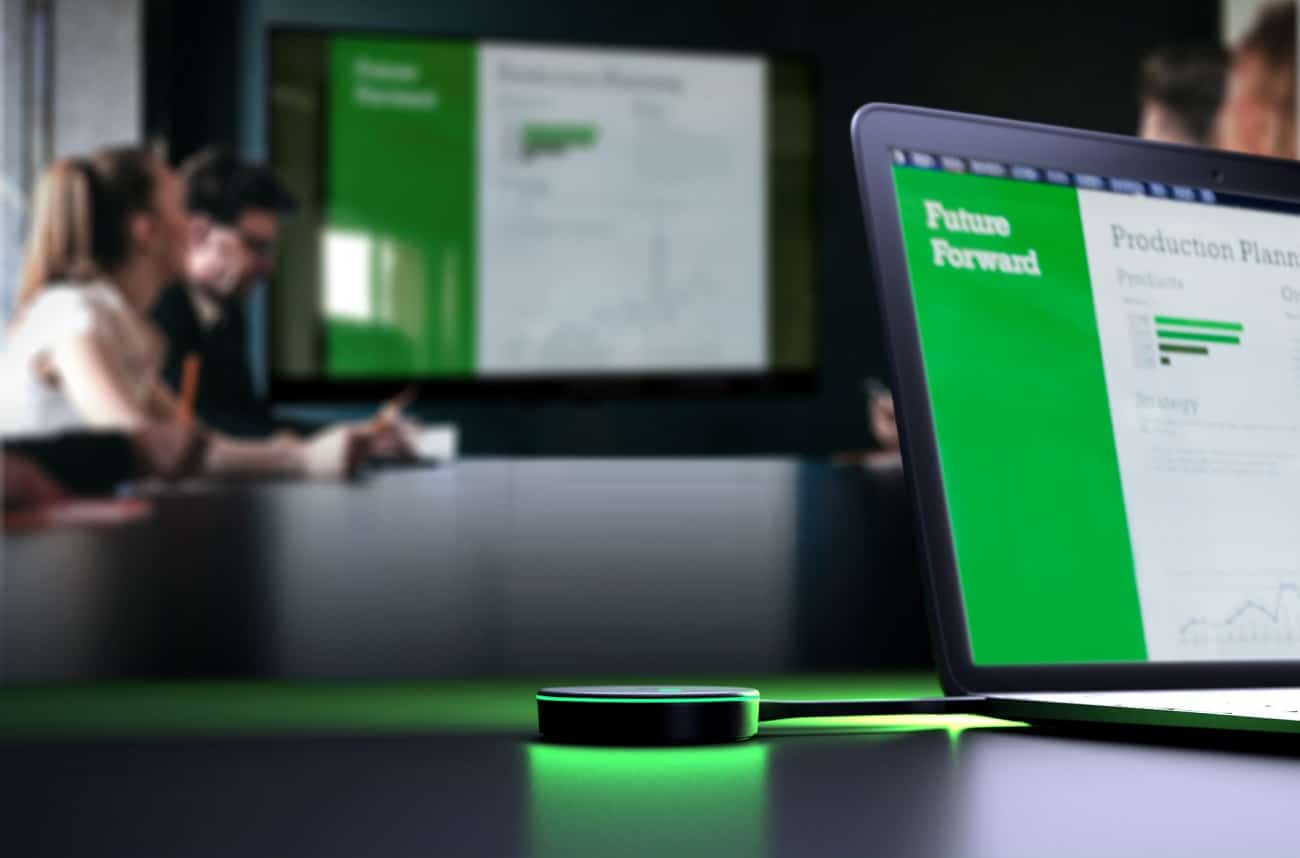
This is revolutionary. InFocus is the first projector manufacturer to bring models to market that use mini-USB to transmit video. Their new IN1100 and IN3100 series projectors feature “DisplayLink”, the technology that enables near instantaneous video connection via USB as well as multi-display capability to show multiple presentations on multiple projectors from just a single USB connection and single computer. More than that, when connected to the projector via USB, your computer can act as a fully functional projector remote control too.

Advantages of using the InFocus projector USB connection:

  • Near instant recognition of video source
  • No fumbling for the function key to toggle the image between PC or laptop display and the projector
  • Smaller input real estate on the projector, so future projectors can continue to shrink
  • Makes projector presentation setup faster and easier
  • Computer becomes a projector remote control
  • One USB output can power multiple projectors and presentations

InFocus projectors with the new USB video connection:

Previously, InFocus skipped the VGA connection in favor of the much less popular M1 connection. This new USB solution is by far their best innovation in some time.


Tips and Trends in the Corporate AV Market

Wednesday, June 4th, 2008

Tandberg products

Today, corporate customers have more experience with AV technology than ever before. Reliability is extremely important. From high projection presentations to sophisticated videoconferencing systems, the corporate AV market increasingly depends on top-notch, cutting edge technology to deliver. AVI-SPL Sales Bid Estimator Patrick Britton, who has worked in the industry for 12 years, shares the latest tips and trends for corporate environments.

Q: What technology has been on the rise in terms of effectively equipping executive boardrooms, training rooms and auditoriums?

Over the past year, I have seen a dramatic increase in requests for videoconferencing solutions. The reasons behind this lie in the introduction of HD videoconferencing and tele-presence solutions, the improved quality of the more traditional line of these products, and a reduction in the costs for the components and required infrastructure (ISDN lines, network bandwidth).

At the same time, travel has gotten more expensive, increasing the cost of attending meetings out of town and overseas. Because of this, it’s much easier for a company to see the return on its investment through the use of videoconferencing technology. All of these combined factors certainly make the need for videoconferencing systems more appealing.

Q: Have you seen in increase in digital signage applications?

There has been a greater demand for these systems, as companies are looking for ways to share important information with their employees, partners and visitors. Digital signage is a technology that can quickly and easily impact a variety of settings. Sometimes these systems are as simples as a few displays in a lobby or cafeteria. In other cases, clients can effectively use them as a network of dozens of displays distributed across a campus, sharing information specific to a building or department.

Q: Do you have any application tips that you’d like to share with end-users?

I always try to work with my clients to make their systems as easy to use as possible. In my opinion, fear is the number one reason that AV systems are not fully utilized. People are afraid of technology. When you introduce that technology into a potentially stressful business environment where someone needs to present information to their peers or management, the potential for disaster is high. By customizing the technology and adequately addressing concerns, we can certainly make the transition into new technology as seamless as possible.

The top concern of nearly every customer is that the system function reliably and meets their needs. Ease-of-use has a direct relationship to reliability. We now have the ability to introduce a control system that can make the AV technology as easy to use as an ATM machine. The cost of the control system can be offset by the increased use of the technology. If a customer wants multiple rooms, I always recommend that they keep the interface (touch panel or pushbuttons) as similar as possible from room to room. Someone who uses Room A should feel familiarity when they walk into Room C. These small details will encourage people to maximize their use of the technology.